How Microsoft Purview DLP currently can help you protect confidential data in Copilot.

Organizations today face a difficult balancing act. Business leaders are eager to adopt tools like Microsoft Copilot to unlock productivity and innovation. Meanwhile, IT and security teams are concerned about safeguarding sensitive information, especially as AI-driven features process vast amounts of organizational data. This tension is real: enabling advanced capabilities without compromising compliance or data protection is a challenge every modern enterprise must solve. Microsoft Purview Data Loss Prevention (DLP) is a key solution to this problem. It provides mechanisms to prevent confidential data from being exposed or misused, even in scenarios involving AI. I want to highlight two features designed to help organizations in controlling what is being processed by Copilot. Blocking Documents Based on Sensitivity Labels One of the foundational features of Purview DLP is its ability to enforce policies based on Microsoft Information Protection sensitivity labels. If your organization...

Copilot in Outlook: Meeting Preparation Is About to Get Smarter

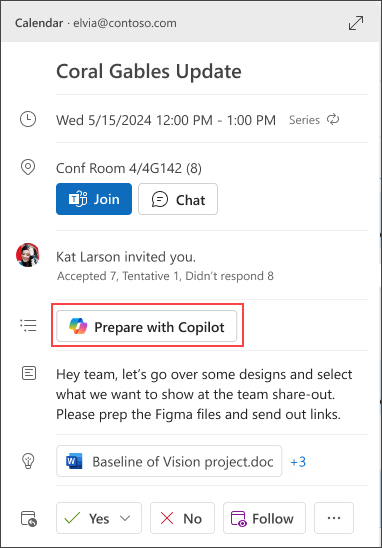
Currently, the “Prepare for meetings with Copilot” feature requires at least three participants. Starting mid-October, this is changing. Copilot will soon support all meetings, including 1:1s. The rollout will begin in mid-October and is expected to complete by November 2025 according to the message center.

With this update, you’ll also see new real-time insights in the Outlook meeting event form, summarizing relevant context, tasks, documents, and other resources. Plus, you’ll be able to chat with Copilot to confirm action items or better understand meeting goals.

The more context Copilot has, the better it works. Meeting series with related emails, shared documents, Teams chats, and previous Copilot transcriptions deliver the richest experience. If your organization limits Copilot to in-meeting use only and deletes content afterward, you’ll miss out on much of this value.

Here is a relevant "how to" guide for users.